How Roadside Guardrails Enhance Driver Safety
Release time:2026-02-14 Click:19
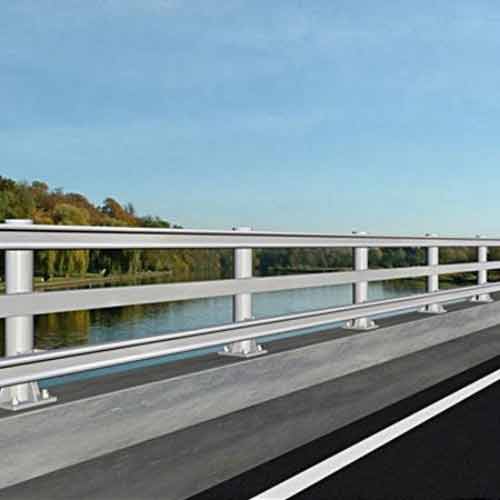
Roadside guardrails are a critical passive safety feature designed to reduce the severity of accidents by preventing vehicles from leaving the roadway or crossing into opposing traffic. These barriers, typically made of corrugated steel beams (W-beams) or cable systems, are engineered to absorb kinetic energy during a collision. When a vehicle strikes a guardrail, the material deforms in a controlled manner, slowing the vehicle down and redirecting it back onto the road. This is particularly vital on curves, steep embankments, or near fixed objects like bridge pillars, where a run-off-road accident could result in a catastrophic rollover or fatal impact.
The effectiveness of a guardrail depends heavily on its installation height, post spacing, and end treatment. Standard guardrails are mounted at a specific height to engage the vehicle's bumper or wheels effectively, ensuring the car doesn't override or underride the rail. The posts are driven into the ground with precise spacing to withstand the impact force without shearing off. Modern designs also feature "breakaway" posts at the ends of the rail, which are designed to fracture or telescope upon impact, preventing the rail from spearing the vehicle cabin—a common cause of severe injury in older guardrail systems.
Beyond protecting occupants, guardrails also shield pedestrians and cyclists on adjacent paths and protect roadside infrastructure like signposts and utility poles from being hit. They are often used in conjunction with crash cushions (impact attenuators) at exit gores or bridge approaches to soften the blow of high-speed impacts. By providing a physical boundary between the driving lane and hazards, guardrails significantly lower fatality rates on highways and rural roads. Their high visibility, often enhanced by reflective delineators, also guides drivers during adverse weather or at night, making them an indispensable component of road safety engineering.
Previous article:The Art and Function of Baluster Railing
Next article:Durable Median Barrier Guardrail Solutions for Heavy Traffic
Hot products
Mobile: +86 13253222720
Email:metalproducts2026@163.com
Email:2671275026@qq.com