Product details description
Designing a guardrail for a highway exit ramp is a critical engineering
task that requires careful consideration of safety, geometry, traffic
conditions, and environmental factors. Exit ramps are characterized by curved
paths, changing speeds, and complex traffic flow, making guardrail design
particularly challenging. A well-designed guardrail must effectively contain and
redirect errant vehicles, minimize the risk of injury to occupants, and
integrate with the ramp’s geometry to avoid disrupting traffic flow. This guide
outlines the key steps and considerations for designing a safe and effective
guardrail for a highway exit ramp.
The first step in guardrail design for an exit ramp is conducting a
thorough site analysis and understanding the ramp’s geometry and traffic
conditions. This includes measuring the ramp’s curvature (radius), grade
(slope), and length, as these factors influence the type and placement of the
guardrail. For example, sharp curves (small radii) require guardrails with
higher lateral stiffness to withstand the centrifugal forces of vehicles
traveling at exit speeds. Traffic analysis involves determining the design speed
(typically 30-50 mph for exit ramps), vehicle types (passenger cars, trucks, or
buses), and traffic volume. This information helps select the appropriate
guardrail type (such as W-beam, box beam, or cable guardrail) that can
accommodate the expected vehicle impacts.
Next, select the appropriate guardrail type based on the site analysis and
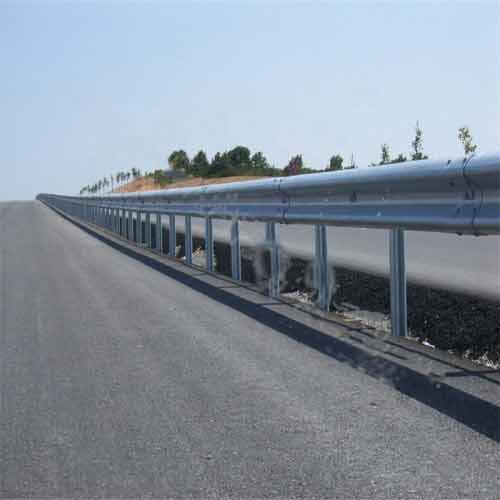
safety requirements. W-beam guardrails are the most common choice for exit ramps
due to their cost-effectiveness, durability, and ability to redirect vehicles
effectively. They are suitable for most passenger car traffic and moderate-speed
ramps. Box beam guardrails, which have a more rigid structure, are used for
high-speed ramps or areas with heavy truck traffic, as they provide better
containment for large vehicles. Cable guardrails are ideal for curved ramps or
areas with limited space, as their flexibility allows them to conform to the
ramp’s geometry while still providing effective vehicle redirection. The
guardrail material (typically galvanized steel) must be corrosion-resistant to
withstand harsh weather conditions.
Guardrail placement and alignment are critical to ensuring safety and
functionality. The guardrail must be positioned to protect hazards such as steep
embankments, bridge piers, or fixed objects (e.g., sign posts) along the exit
ramp. The distance between the guardrail and the hazard (clear zone) must be
sufficient to allow errant vehicles to recover before hitting the guardrail,
typically 10-30 feet depending on the ramp’s speed and curvature. The guardrail
must also be aligned with the ramp’s curve, using curved guardrail sections to
maintain a consistent offset from the travel lane. Proper alignment prevents the
guardrail from creating a sudden obstacle that could cause vehicles to skid or
roll over.
Finally, consider additional safety features and compliance with industry
standards. Guardrail end treatments (such as crash cushions or energy absorbers)
are essential to minimize the risk of injury from head-on impacts with the
guardrail ends. These treatments absorb the energy of a vehicle impact, reducing
deceleration forces on occupants. Additionally, the guardrail must comply with
national and local standards (such as AASHTO’s Roadside Design Guide) to ensure
it meets minimum safety requirements. Post-installation testing and inspection
may be required to verify the guardrail’s performance under simulated vehicle
impacts. By following these steps and considerations, engineers can design a
guardrail that enhances safety on highway exit ramps, protecting both drivers
and infrastructure.
Previous article:
Parking Lot Guardrail Solutions - Vehicle & Pedestrian Safety
Next article:
Highway Guardrail Weather Resistance: Performance Under Extreme Climate Conditions