Product details description
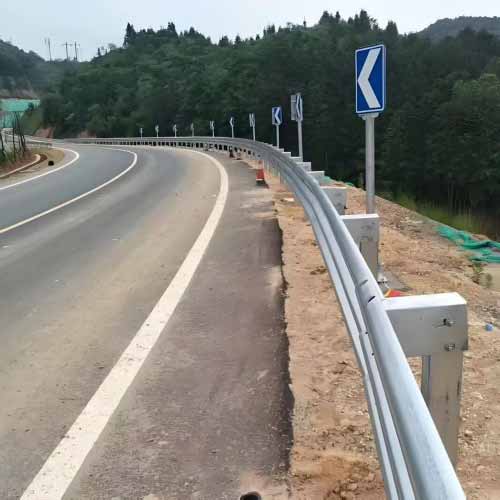
Highway guardrails are essential safety infrastructure designed to
withstand not only vehicle impact but also the relentless assault of extreme
weather conditions. To ensure longevity, the steel components of
guardrails—typically the beams and posts—are heavily galvanized with a zinc
coating. This zinc layer acts as a sacrificial anode, protecting the underlying
steel from rust caused by rain, snow, and humidity. In coastal regions, where
salt spray is a major concern, additional protective measures such as
zinc-aluminum-magnesium alloy coatings or extra-thick galvanization are applied
to resist the aggressive corrosive nature of the marine environment, preventing
structural weakening.
Performance in extreme temperatures is another critical aspect of guardrail
design. In frigid climates, guardrails must resist becoming brittle and cracking
under impact. Modern steel alloys used in guardrail manufacturing are formulated
to maintain ductility even at sub-zero temperatures, ensuring they can absorb
the energy of a collision without shattering. Conversely, in intensely hot
climates, the materials must be able to expand and contract without warping or
buckling. The connection hardware, such as bolts and spacers, is designed to
accommodate this thermal expansion and contraction, ensuring the guardrail
system remains securely fastened to the ground despite the thermal cycling.
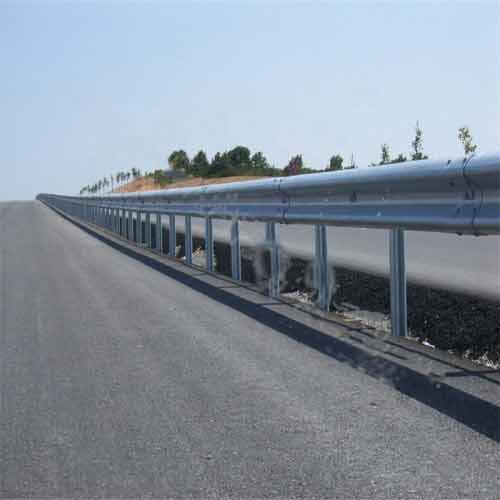
Beyond material composition, the design of highway guardrails facilitates
performance under adverse weather like high winds and heavy snow. The "W" shape
or "Thrie-beam" profile of the rail is aerodynamically engineered to reduce wind
resistance, minimizing the lateral forces exerted on the posts during storms.
Furthermore, in regions prone to heavy snowfall, guardrails must withstand the
immense pressure of snowplows. The strength of the steel and the depth of the
posts are calculated to resist these dynamic loads. By combining
corrosion-resistant coatings with flexible yet tough alloys, highway guardrails
provide reliable, year-round safety regardless of the climate challenges they
face.
Previous article:
How to Design a Guardrail for a Highway Exit Ramp
Next article:
Standard in Road Safety – W-Beam Guardrails