Roadside Safety Systems with Highway Guardrail
Release time:2026-02-18 Click:16
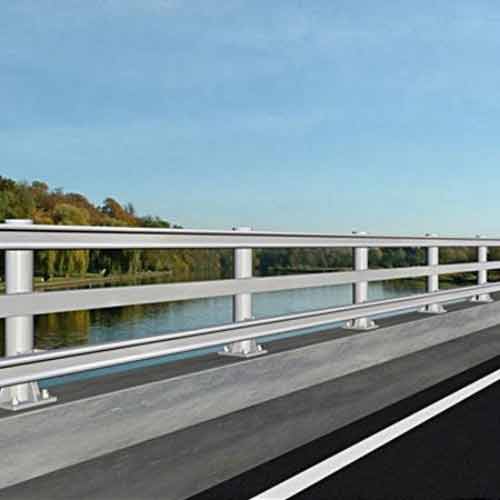
The silent hero of modern transportation infrastructure is the highway guardrail, a passive safety system designed to prevent vehicles from leaving the roadway and to reduce the severity of crashes. Unlike concrete barriers, which can cause significant vehicle damage or rollovers upon impact, guardrails are designed to absorb kinetic energy through controlled deformation. The most common type is the W-beam or Thrie-beam rail, made from high-strength steel and shaped to cradle the vehicle's bumpers. When a car strikes the rail, the corrugations flatten out, and the posts bend slightly, slowing the vehicle down and redirecting it back onto the road rather than bringing it to an abrupt, catastrophic stop. This "deflection" principle is critical for saving lives on high-speed roads.
The components of a highway guardrail system work in unison to manage impact forces. The rails are supported by steel or wooden posts driven into the ground or set in concrete. The spacing of the posts (usually 6.5 feet for W-beams) is calculated to ensure the rail does not deflect too much between supports. For curved roads, the rails are spliced together using special brackets to maintain the curve's radius without creating weak points. The end terminals—the most dangerous part of the rail—are treated with special care. "Breakaway" cable terminals or "impact attenuators" are used so that if a vehicle hits the end of the rail head-on, the terminal crushes in a controlled manner, preventing the rail from spearing the vehicle like a spear.
Installation of a highway guardrail is a highly regulated process governed by strict federal and state standards (such as MASH in the US). It requires heavy equipment like pile drivers and impact hammers to set the posts to the correct depth and torque. The rail height is critical; it must be low enough to catch a car's bumper but high enough to prevent a motorcycle from sliding underneath. For median barriers, double-faced rails are used to protect traffic moving in both directions. In construction zones, temporary guardrails made of lightweight steel or plastic are used to protect workers and drivers, often featuring reflective stripes for night visibility. The entire system is designed to be "forgiving"—it breaks or bends to save the occupant, even if it means the rail itself is destroyed in the process.
Maintenance of a highway guardrail is a continuous responsibility for transportation departments. After a crash, damaged sections must be replaced immediately to restore safety. The steel is galvanized or painted to resist rust, but in areas with heavy snow, the rails are susceptible to damage from snowplows. Debris like tree branches or trash can get caught in the rail, reducing its effectiveness. Engineers conduct regular inspections to check for loose bolts, bent posts, or sections that have been pushed out of alignment. In seismic zones, special ductile rails are used that can stretch and bend without snapping during an earthquake, ensuring the barrier remains intact to contain traffic.
Finally, the societal value of the highway guardrail cannot be overstated. Statistics consistently show that well-designed guardrails reduce fatal accidents by a significant margin, particularly on curves and near drop-offs. They are the difference between a minor fender bender and a tragic plunge into a ravine. For motorcyclists, they are often the only thing preventing a collision with a solid object. The cost of installing guardrails is a fraction of the economic cost of accidents—medical bills, lost productivity, and emergency response. By keeping vehicles on the road, they also prevent environmental damage from spilled fuel or cargo. They are a testament to the idea that safety engineering is not just about protecting infrastructure, but about protecting human life, operating silently in the background of every journey.
Previous article:Railings: The Silent Guardians of Safety and Aesthetics
Next article:Pedestrian Guardrails Enhancing Urban Safety Standards
Hot products
Mobile: +86 13253222720
Email:metalproducts2026@163.com
Email:2671275026@qq.com